
Art and business rarely appear in the same conversation, yet painter Tyler Loftis has spent years proving that creative work and commercial success can grow side by side.
After building a career that has generated more than $2.5 million in art sales, Loftis has become a strong advocate for treating art as both a cultural contribution and a professional enterprise.
His journey spans years of formal training, international study, entrepreneurial ventures, charitable initiatives, and leadership roles within the art community.
While artificial intelligence continues to reshape many creative industries, Loftis remains convinced that traditional painting occupies a unique space that technology cannot replicate.
A Deliberate Path Into the Art World
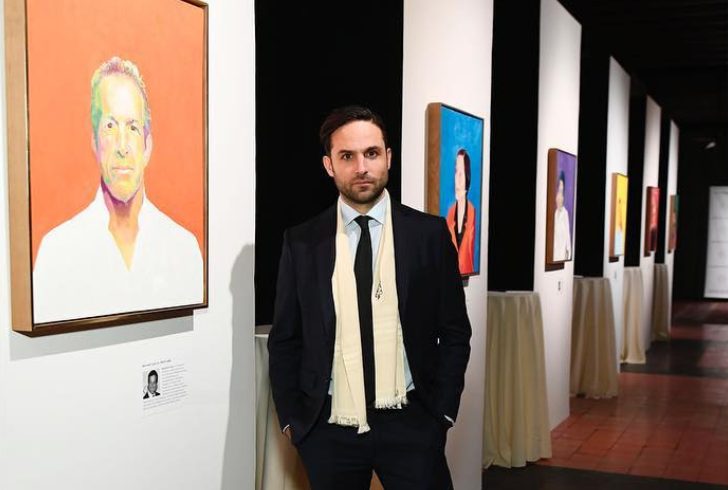
Instagram | tylerloftisart | Born in an art-scarce region of West Michigan, Tyler Loftis cultivated a deep, instinctive artistry entirely on his own.
Tyler Loftis developed an instinctive understanding of artistic growth long before receiving formal instruction. Raised in West Michigan, which he describes as a “fine art desert” during his childhood, he had limited access to structured art education.
That changed after relocating to New York. There, Loftis spent seven years studying observational painting at the New York Studio School and the New York Academy of Art. His education extended beyond classrooms. He traveled throughout Europe, visiting major museums and studying works that shaped centuries of artistic tradition.
Unlike many emerging artists eager to enter the market quickly, Loftis chose patience. He waited until his mid-30s to sell his first painting, believing his work needed to reach a certain standard before introducing it to collectors.
Reflecting on that milestone, Loftis said:
“Any sale as an artist is major. It is a big deal because all of a sudden this thing lives outside of your world, and somebody else has deemed it important enough to be in their world.”
How Painting Prices Grew Over Time
The artist’s earliest paintings typically sold for between $1,500 and $2,000. A decade later, some of those same works carry values approaching $50,000.
Today, many of Loftis’s paintings begin at $25,000, while some pieces command seven-figure prices. Combined sales of his artwork have reached approximately $2.5 million.
According to Loftis, artists often understand the worth of their work better than they receive credit for. He challenges the common belief that creative people struggle with business decisions.
“ As an artist, you’re born knowing the value of what you do,” Loftis explained. “When you’re doing business, you have to think like a business person and not like an artist.”
He points to historical figures such as Leonardo da Vinci, Michelangelo, Titian, and Frida Kahlo as examples of artists who understood both creative expression and market value. Their success depended not only on artistic skill but also on their ability to place their work in front of audiences.
Why Artists Need an Entrepreneurial Mindset
Loftis often compares successful artists to startup founders. Both groups create something from scratch and must build an audience before generating meaningful revenue.
Collectors do not appear automatically. Artists must cultivate relationships, share their work consistently, and create a community around their vision.
That philosophy also explains the limited number of paintings Loftis produces each year. He creates roughly 14 works annually. The smaller output contributes to exclusivity and helps maintain demand.
As Loftis put it:
“Of course, I’d be a much better capitalist if I made 300. But because of that and the inherent quality, they are expensive. And that price continues to go up.”
Challenging Traditional Gallery Culture
Loftis has also voiced concerns about parts of the modern art market. He believes certain gallery practices create unnecessary barriers between art and the public.
According to him, art loses some of its cultural importance when ownership appears reserved only for the wealthy. He argues that people give artwork its meaning, not exclusive settings or status symbols.
“When you have to be on a yacht or driving up in a Lamborghini to buy these pieces, that’s signaling that it’s not important to the rest of the country or the rest of humanity,” Loftis said.
He believes appreciation should come before transactions. When galleries emphasize price tags first, the experience can become centered on investment rather than connection.
To encourage a different approach, Loftis uses his Tribeca studio as both a workspace and a showroom. The studio welcomes artists, musicians, actors, and visitors, allowing people to spend time with the artwork in a more relaxed setting.
Loftis also rejects the idea that viewers should be instructed how to interpret art. He compares that approach to telling patrons at a bar which drink to enjoy or telling concertgoers which song to like.
Making Art Accessible Through AllArtWorks
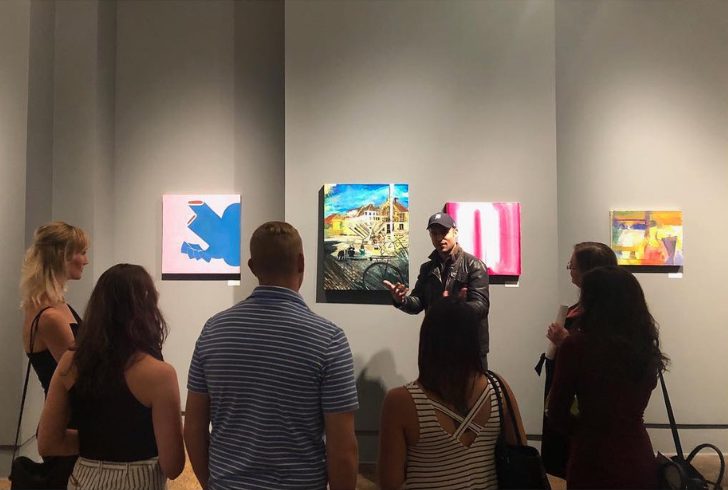
Instagram | tylerloftisart | Loftis founded AllArtWorks in 2015 as a direct-to-buyer marketplace for independent creative professionals.
In 2015, Loftis launched AllArtWorks, a platform designed to connect artists directly with buyers and help creative professionals sell independently.
The platform accepts submissions from artists worldwide. Every piece undergoes evaluation for quality and pricing, with roughly 60% of submissions receiving approval.
Explaining the process, Loftis said:
“Everything on our site is juried, so that artists can navigate the two most uncomfortable conversations: How much is it worth? And is it any good?”
A board of experienced curators reviews the artwork and pricing structure. The platform takes a 40% commission, while listed prices already include framing and shipping costs.
The goal is straightforward: remove common barriers that often prevent artists from successfully bringing their work to market.
Portraits For Purpose and Charitable Giving
Loftis expanded his efforts beyond commercial art through Portraits For Purpose, a charitable initiative launched in 2018.
The concept combines portrait painting with philanthropy. Loftis paints well-known public figures and directs auction proceeds to charities selected by those individuals.
Describing the project, he said:
“I paint famous people and donate the proceeds to the charity of their choice.”
The initiative also serves another purpose. It encourages people to recognize that meaningful contemporary painting still exists today rather than only in museums.
Portraits For Purpose pieces generally sell between $15,000 and $25,000, with all proceeds benefiting designated charitable organizations.
One example Loftis referenced was a portrait of Muhammad Ali. He believes works like these help audiences connect with modern painting in a personal and accessible way.
Leading ArtPrize and Supporting Artists
A recent chapter in Loftis’s career began when he accepted the role of executive director of ArtPrize, an international art competition and cultural festival held annually in Grand Rapids, Michigan.
The event runs for 16 days from late September through early October and turns the city into a public exhibition space.
“Our entire city turns into a canvas,” Loftis said.
The scale of the event is significant. Nearly one million visitors attended during the previous year. ArtPrize awards more than $400,000 directly to artists through public and juried voting. It also distributes over $200,000 in annual grants to support participating creators.
The festival reflects Loftis’s broader belief that art should remain visible, accessible, and integrated into everyday life.
Finding Balance Beyond Productivity
Managing painting, business ventures, charitable programs, and festival leadership requires constant balancing. Yet Loftis sees a common thread connecting each responsibility.
“Art is very much about love. It’s about connection,” he explained.
His experiences in Europe also influenced his perspective on work-life balance. While American culture often celebrates nonstop productivity, countries such as Spain, Italy, and regions of southern France frequently place greater emphasis on quality of life and personal relationships.
Loftis believes that many Americans spend too much time chasing external markers of success and too little time appreciating their own perspectives.
“Art emphasizes that your view is your view,” he said. “It’s yours.”
Why AI Doesn’t Threaten Traditional Painting
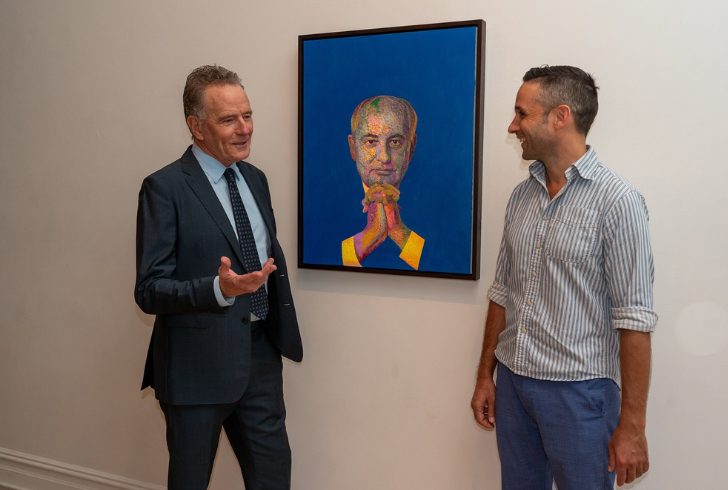
Instagram | bryancranston | By prioritizing artistic skill and community roots, Tyler Loftis quietly built a multimillion-dollar legacy in the art world.
Artificial intelligence has sparked concern across many creative industries, particularly among professionals working in design and digital content.
Loftis acknowledges those concerns. He recognizes that AI has created uncertainty for many artists whose work relies heavily on digital tools.
Painting, however, occupies a different category in his view.
“I have a piece of wood with some hair on the end, dirt mixed with oil,” Loftis said, referring to the basic materials used in painting.
The tools of painting have remained remarkably similar for thousands of years. Because of that continuity, Loftis sees traditional artwork as a direct connection to human history.
He points to cave paintings dating back roughly 40,000 years as evidence of art’s enduring role in documenting human experience. For him, a painted canvas represents more than an image. It serves as a firsthand record of a person's perspective at a specific moment in time.
Tyler Loftis built a multimillion-dollar art career through years of skill development, strategic business decisions, and strong community involvement. From early paintings priced at $1,500 to works valued in the millions, his growth reflects a long-term approach to success.
Through initiatives like AllArtWorks, Portraits For Purpose, and ArtPrize, Loftis has focused on making art more accessible and meaningful to a wider audience. While AI continues to influence creative industries, he believes traditional painting remains valuable because of its direct connection to human experience and artistic heritage.